Bekhruz Nasreddinov on reliability, root-cause thinking, and bringing systems discipline to advanced driver-assistance technology.

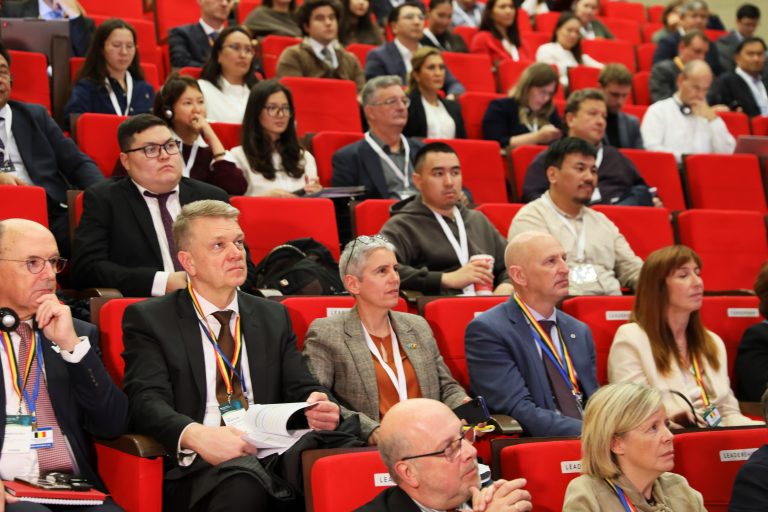
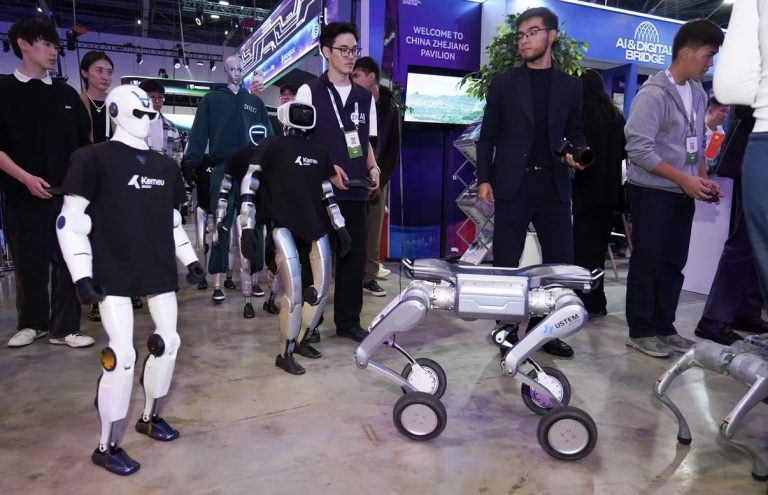
Caption: Advanced sensing technologies are moving from demonstration projects into everyday commercial trucking operations. Photo illustration.
Modern commercial trucks increasingly rely on cameras, radar, LiDAR, and software that must function correctly under real highway conditions. Behind these systems sits a quieter but essential requirement: the ability to design, diagnose, and maintain complex technical chains so that they remain reliable in daily operation.
Bekhruz Nasreddinov’s career offers a practical illustration of how that discipline is built. Over more than a decade he moved from mission-critical banking infrastructure in Uzbekistan to operational technology roles and, since 2022, to the leadership of a U.S. transportation company focused on integrating advanced sensing systems into commercial trucking fleets.
Systems that cannot fail
Nasreddinov’s technical foundation was formed inside the banking sector. At Ipak Yuli Bank he worked as a first-category IT security specialist and later as a database specialist responsible for Oracle systems, daily backups, security key generation, and continuous monitoring of critical infrastructure.
His university diploma project already reflected the same orientation toward reliability. He designed and developed a centralized banking information platform that consolidated client account data and delivered it securely through multiple channels — a website, an Android application, and a web interface — while incorporating electronic-key authentication and automated SMS notifications. At the time, real-time SMS alerts of this kind were still uncommon in the local banking environment.
“The system had to work for both the bank and the client,” he says. “If the data was incomplete or the access failed, the problem was not abstract. It affected real accounts.”
That early experience established a lasting principle: documentation and design are useful only when they match the actual running system.
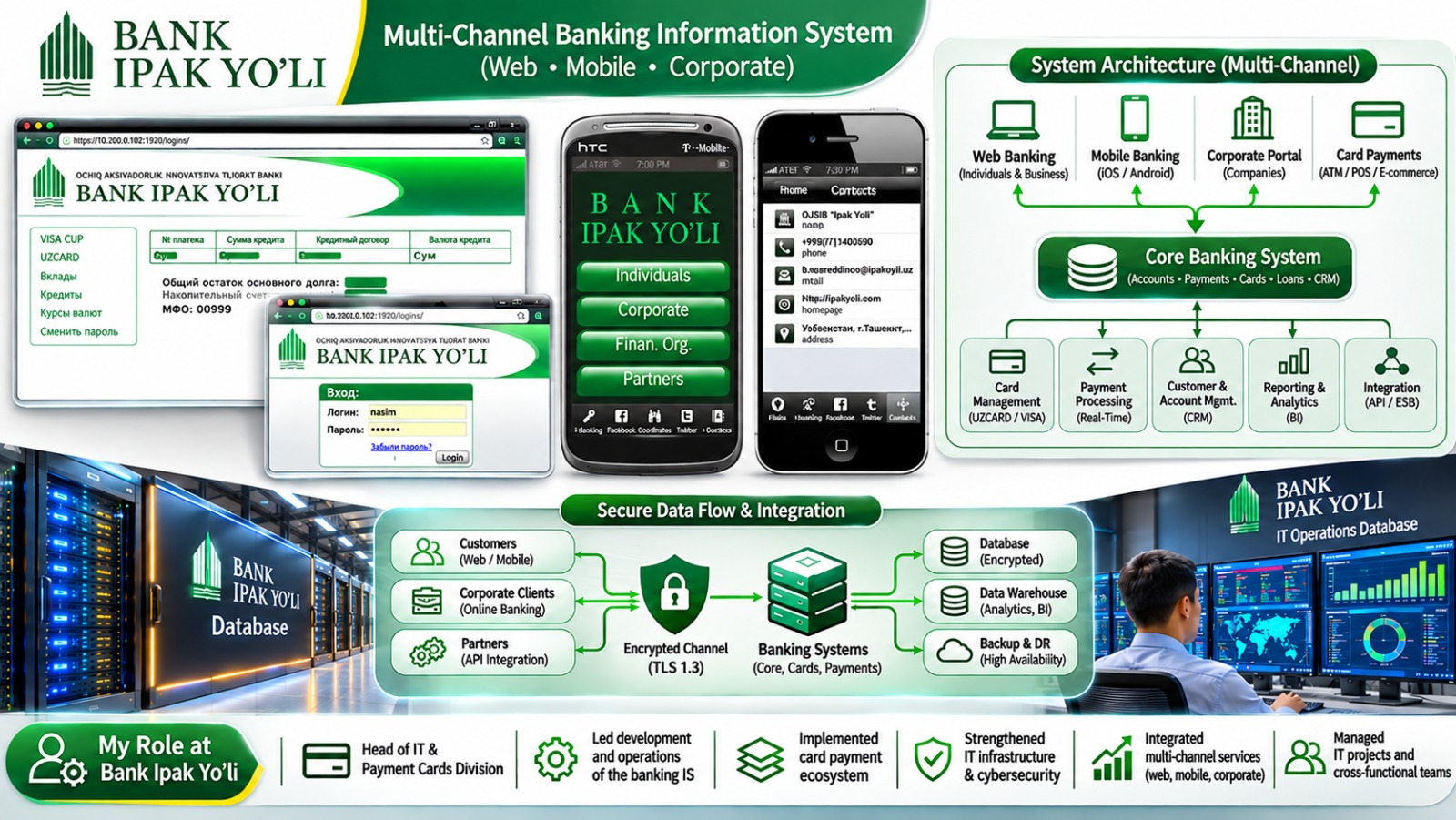
Caption: Early work focused on building reliable, multi-platform systems that had to serve both institutions and end users without failure.
Solving operational problems with technical precision
After the bank, Nasreddinov took on roles that required both technical and operational judgment. At Kapitalbank he advanced from plastic-card systems management to coordinating investment-department activities, including a structured liquidation and merger process that transferred assets valued at approximately $12.6 million.
Later, in the construction sector, he applied systems thinking to production and cost problems. At Krystal Group he analyzed the limitations of traditional concrete and expanded-polystyrene façade materials and introduced a fiber-reinforced concrete mixture that was lighter, more durable, and less expensive to maintain. He also redesigned formwork so that chipboard sheets could be reused for years rather than failing after limited cycles. Both changes required careful analysis of materials, processes, and long-term cost.

These projects reinforced a consistent working method: identify the actual point of inefficiency or failure, test a practical alternative, and verify the result under real conditions.
Applying the same discipline to commercial vehicles
Since March 2022 Nasreddinov has served as CEO and owner of Ar Razzaaq Transportation Inc. The company operates in the American trucking sector with a clear technical direction: integrating cameras, radar, LiDAR, and related sensing technologies into fleet operations.
He sees a direct continuity between earlier work and the current challenge.
“In banking or production the first alarm is rarely the full diagnosis,” he explains. “A system may report a problem in one place while the root cause lies elsewhere — in the data flow, the configuration, the physical connection, or the process around it. The same logic applies to ADAS. A sensor alert does not automatically mean the sensor itself is the failure. You have to follow the entire chain.”
His approach to ADAS emphasizes practical reliability: correct sensor placement, stable data pipelines, clear mapping between physical hardware and logical system configuration, and verification after every change. The objective is not simply to install equipment, but to create systems that fleets can trust in everyday operation on American highways.
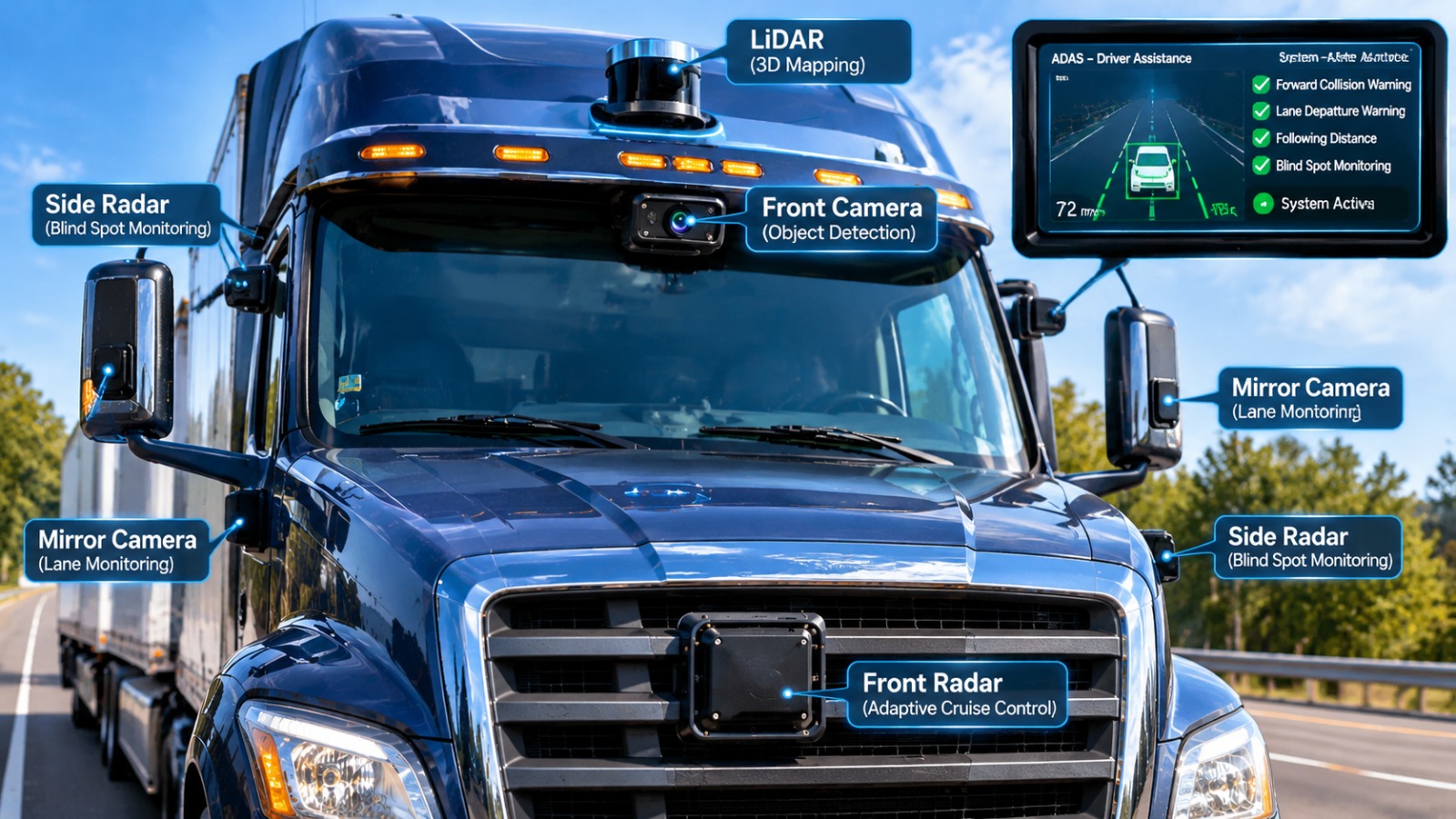
Caption: Reliable ADAS performance depends on correct physical installation, clean data pathways, and continuous verification under real operating conditions.
A continuous thread
Across banking infrastructure, industrial operations, and commercial transportation, the consistent theme in Nasreddinov’s work has been the engineering of systems that organizations depend on. Whether the system managed client accounts, production materials, or truck safety sensors, the requirement remained the same: locate the real problem, implement a durable solution, and confirm the result with measurements.
That discipline, he argues, is precisely what commercial fleets need as advanced driver-assistance technologies move from demonstration projects into routine use.
EXPERT
Bekhruz Nasreddinov
IT specialist with more than ten years of experience in enterprise systems, database architecture, security, and operational technology. CEO and owner of Ar Razzaaq Transportation Inc., focused on the integration of advanced sensing and driver-assistance systems for commercial trucking fleets in the United States.