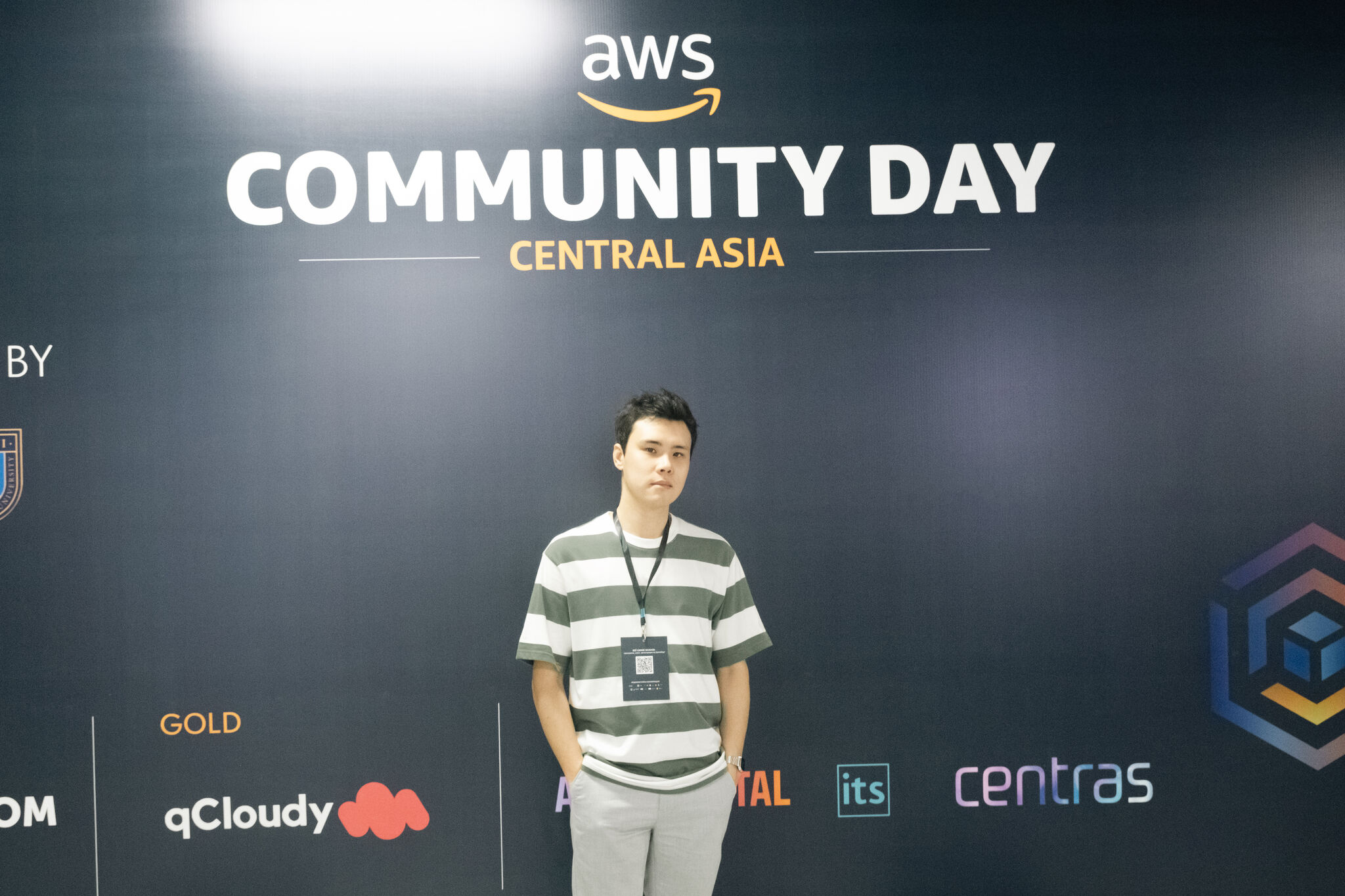
Nurzhan Nogerbek is a Team Lead, Tech Lead, and software engineer with extensive professional experience. Throughout his career in IT, he has worked across FinTech, e-commerce, retail, logistics, telecommunications, cloud technologies, artificial intelligence, and machine learning. Today, he works in the innovation technology department of one of Kazakhstan’s largest commercial banks, whose services are used by millions of people every day, and is responsible for developing its BaaS platform.
Kazakhstan has already demonstrated to the international community that it can be Central Asia’s technology leader. But the next question is more challenging. Can the country convert its digital leadership into sustainable economic growth? This was the central topic of our conversation with Nurzhan, although it was far from the only one.
Banking as a Service
“BaaS stands for Banking as a Service. Put simply, it is a model in which a bank provides its infrastructure, licence, payment gateways, and regulatory framework through APIs. A partner — a FinTech company, marketplace, retailer, or another type of business — can then build its own product on top of this infrastructure without becoming a bank,” Nurzhan explains.
In practice, this is what is commonly known as embedded finance, where banking products are integrated directly into a partner’s application.
“The end user does not distinguish between where the partner’s application ends and the banking service begins. From the user’s perspective, it is one seamless experience. They can apply for an installment plan, open an account, or make a card payment without leaving the interface they are already familiar with.”
According to Nurzhan, competition in financial services is no longer limited to individual banking products. Entire ecosystems are now competing with one another. A large bank has millions of customers, established infrastructure, and the trust of regulators. Small and medium-sized businesses, meanwhile, have speed, niche expertise, and flexibility. BaaS connects these two worlds.
To illustrate how this works, Nurzhan provides a straightforward example:
“Imagine a start-up that wants to issue debit cards for its audience. To do this independently, it would need to obtain a banking licence, complete numerous audits, establish payment processing, anti-fraud and compliance systems, and integrate with payment networks such as Visa and Mastercard. This would require years of work and enormous investment. Through a bank’s BaaS platform, however, the start-up can connect via API in as little as one day. Everything related to regulatory requirements and core banking processes remains the bank’s responsibility. As a result, everyone benefits. The bank gains a new monetisation channel and access to a new audience. The partner primarily benefits from a faster time to market. For us as software engineers and technology specialists, it is a high-load distributed system in which the cost of an error is measured not only in negative customer comments on Threads, but also in real money.”
High-Load Systems
In some industries, peak demand can be predicted. In e-commerce, for example, it may coincide with Black Friday, a major advertising campaign, or a seasonal surge in users. FinTech is different.
“In FinTech projects, transactions take place continuously — day and night, on weekdays and public holidays. Every request represents the movement of real money and may involve scoring parameters, anti-fraud checks, and compliance procedures. When a new partner connects to a BaaS platform, the load can increase immediately. A single request made by an end user in a partner’s mobile application may pass through a chain of dozens of services within the bank’s BaaS platform. Without a complete view of the system, it is impossible to understand exactly where that chain breaks when an incident or anomaly occurs,” Nurzhan says.
This challenge became his starting point. To give the team and stakeholders a complete view of the system rather than a collection of disconnected components, one of the first things he did after joining the project was build its monitoring and observability capabilities almost from scratch.
“A unified Grafana dashboard answers three fundamental questions for every stakeholder: what failed, where it failed, and why it failed.”
Teams need specific facts that allow them to quickly assess the scale of a problem and make an immediate decision. Nurzhan therefore established a core set of metrics, beginning with RPS — the number of requests per second.
“If the platform normally processes approximately 500 requests per second and that number increases to 2,000 after a new partner is connected, it immediately becomes clear that the traffic pattern has changed. The next step is to determine exactly where the system begins to struggle.”

Traffic volume alone, however, does not indicate whether the system is healthy. The second major group of metrics Nurzhan introduced was a breakdown of HTTP requests by status: successful responses, client-side application errors, and server errors.
“Suppose that out of 10,000 requests per minute, 9,700 are processed successfully, 200 return client application errors, and 100 return server errors. That already represents a server failure rate of 1%. In FinTech, that level is a signal for immediate action. The dashboard shows not only that errors are occurring, but also which specific services are producing them.”
Even when the number of errors is low, the system may still be unhealthy in another way: requests may be completed, but far too slowly. This is why the third key metric was response time, or latency. Average values are not enough here. The most important measurements are percentiles such as p50, p90, and p99.
“Imagine that 99 requests are completed in 100 milliseconds, while one request takes 10 seconds. The average response time would be approximately 200 milliseconds. On paper, everything appears normal. However, if the service must respond within 500 milliseconds under the SLA and the p99 latency has already reached four seconds, it means that every hundredth user is waiting many times longer than expected. In FinTech, that is already a serious problem. Timeouts increase, the customer experience deteriorates, and the partner begins to perceive the platform as unstable.”
To connect these anomalies with specific product changes, the fourth metric Nurzhan introduced was the proportion of unsuccessful requests — the error rate.
“If the error rate increases from 0.1% to 2% immediately after a new version of a service is deployed, the most recent release is almost always the first place to investigate. The team can then take preventive action quickly—for example, by temporarily rolling back that particular release.”
Metrics alone are still insufficient. They show what is happening, but they do not always explain where a specific request is failing within a complex chain of services. Nurzhan’s next step was therefore to introduce distributed tracing using OpenTelemetry and Grafana Tempo.
“Every request is assigned a trace identifier. Each service in the chain records its own segment of the operation, including its execution time. You can open a single trace and see the entire picture. The first service took 12 milliseconds, the second took 45 milliseconds, and the third required 7,800 milliseconds to execute its business logic. It immediately becomes clear where the bottleneck is located.”
To add further detail to this picture, logs are collected through Filebeat and Logstash, normalised into a consistent format, and stored in OpenSearch. Each log entry contains the service name, error level, request path, processing time, and trace identifier.
“In practice, it looks like this. The dashboard shows that the error rate has increased from 0.2% to 3%. You inspect the HTTP statuses and discover that server errors are coming from one particular service. You then open the trace for a failed request. Of the ten seconds of total processing time, seven seconds are being consumed by one section of the code. Using the trace identifier, you move to the logs and find a timeout during an external call. The entire diagnostic process takes two or three minutes instead of two hours of analysis and endless calls with colleagues.”
According to Nurzhan, this is where the main benefit becomes clear:
“When you know exactly where an error is occurring, you are no longer guessing. You fix a specific service or a specific section of code. Alternatively, you identify an anomaly before users notice it and take preventive action. Partners expect predictability. If the platform is expected to operate continuously, the team must be able to detect problems through metrics, numbers, and data within minutes.”
Where FinTech Is Heading
The conversation then turned to the market as a whole. Where is FinTech in Kazakhstan heading, and what role will BaaS platforms play in its development?
“Today, it is difficult for Kazakhstani FinTech start-ups to compete directly with banks. Banks already have millions of customers, payment infrastructure, regulatory trust, and substantial capital. For many teams that want to succeed in FinTech, the most realistic strategy is therefore not to fight the banks, but to partner with them. BaaS platforms are becoming the bridge that enables this partnership,” Nurzhan believes.
At the same time, competition is increasingly shifting towards data and artificial intelligence. For many years, banks in Kazakhstan have been developing ecosystems that combine a wide range of digital products, including installment financing, marketplaces, lifestyle services, business products, and integrations with eGov.
“If a start-up has AI-based technology that provides a more accurate recommendation system, automates processes, solves a specific problem, and delivers a measurable business impact, the bank no longer sees it as a competitor. It becomes a partner — or, in some cases, an asset that can be integrated into the bank’s ecosystem.”
To make this idea more concrete, Nurzhan outlines several practical scenarios. The first example is intelligent lending.
“A customer may frequently shop on the same marketplace, regularly use small installment plans, and consistently repay them on time. Based on this history, a machine-learning model can offer the customer a credit limit in advance — before they even click the button to place an order using installment financing. For the customer, it creates the impression that the product understands their needs. For the FinTech product and the bank, it means more approved installment plans and a higher conversion rate.”
The second example is fraud detection.
“If a person usually makes daytime payments from Almaty and a large transaction suddenly appears at night from another country, the system must react within seconds. Machine-learning models can detect anomalies in behavioural patterns by analysing geolocation, transaction amounts, frequency of operations, devices, and time of day. The more high-quality historical data the system has, the fewer legitimate transactions it blocks and the better it becomes at protecting customers from actual fraud.”
The third area highlighted by Nurzhan is intelligent recommendation systems.
“Not every customer should be shown the same digital or financial product. One person may need a card with travel cashback, another may be interested in a deposit, while a small business owner may need working-capital financing within a trading platform. AI helps create a customer profile and offer the right product at the right moment. This is especially important in a BaaS model because the financial service can appear directly inside a partner’s application rather than only within the bank’s own app.”
The role of large language models is also growing.
“LLMs are already being actively used in practical FinTech scenarios. One example is an AI support assistant. A customer wrote in a chat, ‘Why was my payment unsuccessful?’ and the system uses the transaction context and status to explain the reason in straightforward language. Another example is an internal assistant for employees. It can quickly analyse a typical incident, suggest the next step, or generate a concise summary of a case. This accelerates the work of teams and reduces the amount of time spent on routine tasks.”
Nurzhan emphasises, however, that none of this will produce meaningful results without following the correct sequence: “First, data must be collected, cleaned, and structured. Machine-learning models can then be trained on that data. Only after this stage does it make sense to introduce LLMs and more advanced automation. When the data is complete and properly structured, AI begins to generate measurable value: it accelerates decision-making, improves risk predictions, increases conversion, and reduces the amount of manual work.”
How to Enter the IT Industry Today
At the end of the conversation, we asked Nurzhan what advice he would give to people who are only beginning their journey into IT. His answer starts with an honest assessment of the market.
“In recent years, I have seen competition in IT increase significantly, while the number of junior-level vacancies has declined. Students and recent university graduates often contact me on LinkedIn asking for referrals or internship opportunities. Entering the profession has become more difficult, and people are looking for any possible way to break through and find their place in the industry.”

Against this background, the traditional approach of submitting a CV through a company website and waiting for a response is no longer sufficient. Most corporate career websites now use an Applicant Tracking System, or ATS, to automate recruitment. This is the first filter candidates encounter before their CV is reviewed by a person. Like any automated system, an ATS searches for keywords and can make mistakes. A strong candidate may be removed from the recruitment funnel simply because the wording in their CV does not match the filters used for a particular vacancy. For this reason, Nurzhan believes that early-career specialists need to take a comprehensive and proactive approach.
“It is better not to rely on luck. Take the initiative and contact employees at the companies you are interested in. They may be able to recommend you or at least tell you who the right person is to approach. It also makes sense to join Telegram groups where unadvertised vacancies in different areas of IT are shared. More importantly, you need to become part of the professional community. Attend meetups as a guest, participate in hackathons, find communities that match your interests, and, ideally, join them as a volunteer. This is networking, something many people underestimate. Someone may notice you, invite you to an interview, or offer you an internship.”
Nurzhan himself has been actively involved in Kazakhstan’s IT community for more than ten years. He is a member of the core team of Qazaq IT Community, one of the country’s largest IT communities.
“At Qazaq IT Community, we organise meetups on a wide variety of topics, and representatives of different companies regularly attend them. They often come to these events looking for new talent. They pay attention to who asks questions, who helps at the venue, who is already contributing as a volunteer, and who might be a good candidate for an internship.”
The same philosophy led to the creation of the Volunteer Passport project, which Qazaq IT Community launched in July of 2026. Nurzhan participated in testing the project and defining its functional and non-functional requirements.
“Essentially, it is a platform where volunteers can register for events they are interested in and receive a letter of appreciation after the event. Organisers, meanwhile, receive a digitised process for preparing and running events. From a single interface, they can see how many people registered and how many actually attended using QR-code check-in at the entrance. They can assign tasks to volunteers, keep records of participation, collect feedback after the event, evaluate attendance, and identify which areas of the venue required additional support.”
For Nurzhan, the project is a strong example of how volunteering can benefit early-career specialists — and not only them — in two ways at once. On the one hand, a person contributes to the IT community. On the other hand, they gain practical experience, strengthen their personal brand, and build professional connections. The subject is particularly relevant now, as the United Nations General Assembly has proclaimed 2026 the International Year of Volunteers for Sustainable Development. The initiative was adopted following a proposal by Kazakhstan, which had previously declared 2020 the national Year of the Volunteer.
Nurzhan’s final advice is therefore straightforward:
“If you want to enter the IT industry, learn the technologies, build a portfolio of different personal projects, and engage with people at the same time. In a changing market, the person who succeeds is often not the one who simply waits for an interview invitation, but the one who takes the initiative and knocks on the door.”